

Lake Tahoe Boating Guide: Rentals, Inspections and Launch Ramps
Updated September 6, 2026.
Boating on Lake Tahoe takes more planning than renting a boat on an ordinary inland lake. Visitors need to choose the right launch or marina, understand aquatic invasive species rules, watch rapidly changing wind and weather, and follow Tahoe’s large no-wake zone.
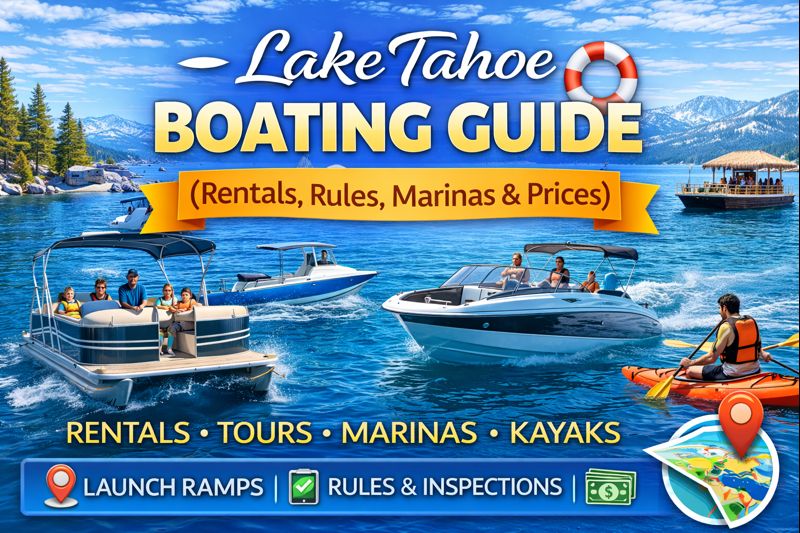
Easiest option: Book a public cruise or captained charter.
Best for families and groups: A pontoon or captained powerboat with shade and enough seating.
Bringing your own boat: Check the official Tahoe inspection and decontamination requirements before driving to a launch ramp.
Before leaving shore: Download the Tahoe Boating App for no-wake zones, ramps, marinas, weather alerts, fuel, bathrooms, and emergency information.
Choose the Right Lake Tahoe Boating Experience
| Option and best fit | What to confirm |
|---|---|
| Public cruiseBest for: First-time visitors and familiesMain advantage: No driving or inspection planning | What to confirm: Departure point, duration, seating, food, and cancellation policy |
| Captained charterBest for: Groups and special occasionsMain advantage: Custom route without operating the boat | What to confirm: Captain, fuel, gratuity, passenger limit, and weather policy |
| Self-drive rentalBest for: Experienced operatorsMain advantage: Flexible swimming and sightseeing stops | What to confirm: Operator requirements, fuel, deposit, boundaries, and return time |
| Kayak or paddleboardBest for: Close-to-shore exploringMain advantage: Quiet, lower-cost access | What to confirm: Wind, cold water, life jackets, launch rules, and return route |
| Your own trailered boatBest for: Owners familiar with their vesselMain advantage: Use your own equipment | What to confirm: Inspection seal, sticker, decontamination, ramp hours, and water level |
For visitors who prefer someone else to handle the boat, compare current operators in our Lake Tahoe boat tours guide.
Lake Tahoe Watercraft Inspection Rules
The Tahoe Watercraft Inspection Program protects the lake from aquatic invasive species. Requirements depend on how the watercraft is powered, transported, and launched.
Trailered Motorized Watercraft
Before towing your boat, check the official allowable-engine guidance. The Tahoe inspection program says most carbureted two-stroke engines are prohibited, while direct-fuel-injected two-strokes and those meeting its listed CARB or EPA certification standards are allowed. If you are unsure about your engine, confirm with the program before traveling.
Trailered motorized boats and personal watercraft need a Tahoe inspection sticker and seal. A boat with an intact accepted Tahoe-region wire seal may be able to proceed directly to a launch facility. A vessel without an intact seal must go through the regional inspection process.
Following inspection, motorized and other trailered watercraft are subject to decontamination under the current program. Arriving fully Clean, Drained, and Dry reduces inspection time and can reduce decontamination fees.
Trailered Non-Motorized Watercraft
Trailered non-motorized vessels, such as some sailboats, require inspection and decontamination. The inspection sticker may be free, while decontamination fees can still apply.
Hand-Launched Electric Watercraft
Hand-launched electric watercraft, including eFoils, electric paddleboards, and boats using small electric motors, require a free annual inspection sticker. The operator must keep proof of inspection and follow the Clean, Drain, and Dry requirements between launches.
Hand-Launched Kayaks, Canoes, and Paddleboards
Hand-launched non-motorized watercraft should be Clean, Drained, and Dry before entering Tahoe-region water. Free inspections and decontaminations are available, and the Tahoe Keepers program explains how paddlers can inspect and clean their own equipment.
Rules are stricter when moving between Lake Tahoe and other Tahoe Basin lakes such as Fallen Leaf or Echo Lakes. Check the destination-specific guidance before changing waterbodies.
Read the official inspection FAQ | Check current stickers and fees | Find inspection locations and hours
How to Prepare for Inspection
- Drain the bilge, ballast tanks, live wells, engine, sea strainers, and storage compartments.
- Remove plants, mud, standing water, fishing debris, and other material.
- Dry the hull, trailer, ropes, anchors, life jackets, toys, and every item that contacted water.
- Open compartments so inspectors can reach them.
- Bring keys, engine adapters, ballast bags, and equipment needed to operate pumps or systems.
- Do not launch in another waterbody after inspection unless you understand how that affects the seal and reinspection requirement.
Public Boat Launch Ramps Around Lake Tahoe
Ramp hours, fees, parking, dock availability, water depth, and seasonal opening dates can change. Contact the launch facility directly before towing a boat across the basin.
| Launch and area | Planning note |
|---|---|
| Cave RockArea: Southeast Shore, NevadaUseful for: Motorized boats and trailer parking | Important planning note: Offsite inspection is required for motorized watercraft without a valid seal |
| Sand HarborArea: East Shore, NevadaUseful for: Scenic East Shore access when operating | Important planning note: Nevada State Parks listed the boat ramp as closed for the season when checked October 13, 2026 (Pacific time). When operating, the launch is first come, first served and separate from beach vehicle reservations. |
| El Dorado / Lakeview CommonsArea: South Lake TahoeUseful for: Central South Shore launching | Important planning note: Seasonal access and lake level can affect operations |
| Lake ForestArea: Near Tahoe CityUseful for: North and West Shore access | Important planning note: TCPUD posted a November 1–30 dredging closure when checked October 20, 2026. Completion depends on weather and conditions; winter launch operations move to Obexers Marina during the project. Check the current Lake Forest notice before towing a boat. |
| Tahoe Vista Recreation AreaArea: North ShoreUseful for: Seasonal North Shore launching | Important planning note: Contact North Tahoe PUD for current operations |
| Kings Beach Boat RampArea: North ShoreUseful for: Small craft and local access | Important planning note: Verify current operator, hours, and vessel restrictions |
The official inspection program also lists private launch facilities, including marinas around South Shore, North Shore, West Shore, Incline Village, Fallen Leaf Lake, and Echo Lakes.
See the current official launch list
Sand Harbor Boat Launch
Nevada State Parks listed Sand Harbor’s boat ramp as closed for the season when checked October 13, 2026 (Pacific time). This is the observation date, not the closure start date. Check the official park page linked below before towing a boat there. When operating, Sand Harbor’s boat launch is first come, first served and separate from its day-use beach reservation system. Hours or dock availability can change because of weather, repairs, water level, or seasonal operations.
Do not assume the boat ramp follows the same reservation rules as the beach parking lot. Check Nevada State Parks alerts before driving there with a trailer.
Check current Sand Harbor hours, fees, and alerts
Cave Rock Boat Launch
Cave Rock has a double ramp, dock access, and more than 40 trailer parking spaces. Motorized boats must complete the offsite inspection process before entering when they do not have an accepted intact seal.
The facility is seasonal, and its launch hours differ by time of year. Verify current conditions before arrival.
Check current Cave Rock information
Boat Rentals on Lake Tahoe
Rental fleets vary by marina and may include pontoons, bowriders, wake boats, personal watercraft, kayaks, and paddleboards. Do not compare companies by the advertised base price alone.
Questions to Ask Before Booking
- Is fuel included, prepaid, or charged after the rental?
- Are taxes, marina fees, cleaning fees, or booking fees added later?
- How large is the security deposit or card hold?
- What boating education, identification, or age requirements apply?
- Is a temporary rental safety orientation included?
- Are tubes, skis, wakeboards, ropes, and life jackets included?
- Does the boat have shade, a swim ladder, storage, and child-sized life jackets?
- What geographic boundaries apply?
- What happens if wind, lightning, smoke, mechanical trouble, or unsafe conditions cancel the rental?
- How early must the boat return to avoid a late fee?
Boater Education Requirements
Lake Tahoe sits in both California and Nevada, so operators should confirm which state rules apply to their launch, rental, and route.
- California: Since January 1, 2025, motorized vessel operators generally need a California Boater Card, although exemptions exist, including certain rental situations.
- Nevada: Operators born on or after January 1, 1983 generally need an approved boating education card before operating on interstate waters.
A rental company’s orientation does not automatically replace every state requirement. Ask the operator before paying and carry required proof while underway.
Lake Tahoe No-Wake Zones
Motorized boats must operate at 5 mph or less within Tahoe’s no-wake areas. Current Tahoe guidance identifies these key boundaries:
- Within 600 feet of the shoreline
- Within 100 feet of swimmers and paddlers
- Within 200 feet of shoreline structures
- Throughout Emerald Bay
The free Tahoe Boating App uses an interactive map to show a boat’s position relative to no-wake zones. It also includes ramps, marinas, fuel, restrooms, points of interest, weather alerts, hazards, and emergency contacts.
Find the Tahoe Boating App through the official program
Weather, Wind, and Cold-Water Safety
Lake Tahoe is a high-elevation, cold-water lake. Warm air does not mean warm water, and a clear morning does not guarantee a calm afternoon.
- Check the marine forecast, wind, radar, smoke, and live alerts before leaving shore.
- Choose a route that allows a safe return if conditions change.
- Keep passengers in properly fitted life jackets when appropriate, especially children, weak swimmers, paddlers, and anyone on deck in rough conditions.
- Carry more warm clothing and drinking water than a normal summer forecast suggests.
- Do not let a rental deadline pressure the operator into crossing unsafe open water.
- Know how to contact emergency services and identify your location on the lake.
Boating With Children
- Confirm the operator has Coast Guard-approved life jackets in every child’s actual size.
- Choose a boat with shade, stable seating, a swim ladder, and a working boarding area.
- Keep the first outing short and close to the departure marina.
- Bring warm layers, sunscreen, snacks, water, dry clothing, and motion-sickness supplies if needed.
- Assign one adult to watch children whenever the operator is occupied.
- Keep hands, feet, hair, ropes, and loose clothing away from the propeller and controls.
Families that prefer not to operate a vessel should consider a public cruise from our boat tour comparison.
Paddling Lake Tahoe
Kayaks and paddleboards provide easier shoreline access, but they are not risk-free. Wind can make the return trip much harder than the outward trip, and cold-water immersion can quickly become dangerous.
For rental locations and beach access, compare four starting points in our Lake Tahoe kayaking and paddleboarding guide.
- Stay close to shore unless the route, equipment, weather, and group experience support a longer crossing.
- Wear a life jacket and leash appropriate for the craft and conditions.
- Carry communication, identification, water, sun protection, and a warm layer.
- Use the Lake Tahoe Water Trail and Tahoe Boating App to plan legal launch points and routes.
- Clean, Drain, and Dry the craft and gear before and after every waterbody.
Can You Boat to Emerald Bay?
Emerald Bay is one of Tahoe’s most popular boat destinations, but the entire bay is a no-wake zone. Expect slow travel once inside, watch for swimmers and paddlers, and use only legal anchoring or mooring areas.
Do not plan an Emerald Bay run based only on straight-line distance. Fuel use, wind, chop, loading time, slow zones, swimming stops, and the return trip all affect the schedule.
Best Time of Day to Boat
The best departure time is the period with the safest forecast, not simply the earliest available rental. Many visitors choose morning because forecast winds are often lower, but conditions must still be checked on the actual day.
Build a margin into the return plan. A boat that takes 35 minutes to reach a destination in calm water can take much longer returning into wind and chop.
What to Bring on a Lake Tahoe Boat
- Required life jackets and safety equipment
- Boater card or education proof when required
- Photo identification and rental confirmation
- Warm layers and rain or wind protection
- Sunscreen, hats, sunglasses, water, and food
- Phone in a waterproof case plus a backup charging method
- Paper or offline navigation backup
- First-aid supplies and needed medication
- Towels and dry clothing
- Trash bags so nothing enters the lake
Common First-Time Mistakes
- Driving to a launch ramp before completing the required inspection process
- Assuming every ramp is open, deep enough, or equipped with a dock
- Booking a boat too large for the operator’s experience
- Ignoring fuel, deposit, and weather-cancellation terms
- Crossing open water late in the rental
- Treating the 600-foot shoreline zone like open-speed water
- Launching a kayak or paddleboard without cleaning and drying it
- Planning a swim without accounting for cold water and wind
Frequently Asked Questions
Does every boat need an inspection?
Motorized, trailered, and hand-launched electric watercraft have formal inspection requirements. Hand-launched non-motorized craft must be Clean, Drained, and Dry and can receive free inspection and decontamination. Check the official program for the exact rule matching your vessel.
Can a sealed boat go directly to the ramp?
A vessel with an intact accepted Tahoe-region inspection seal may be able to proceed directly to a participating launch facility. Check the current sticker requirement and make sure the seal has not been broken or altered.
How much does a Lake Tahoe boat rental cost?
Pricing changes by boat, marina, season, duration, fuel policy, and demand. Compare the complete out-the-door price instead of using an old hourly number from a blog.
Do you need a license to rent a boat?
Operator education requirements differ between California and Nevada, and rental exemptions or temporary procedures may apply. Confirm the exact requirement with the rental operator before booking.
Where can you launch a boat?
Public launch sites include Cave Rock, Sand Harbor, El Dorado or Lakeview Commons, Lake Forest, Tahoe Vista, and Kings Beach when operating, subject to seasonal conditions and facility rules. Nevada State Parks listed Sand Harbor’s boat ramp as closed for the season when checked October 13, 2026 (Pacific time). Check each facility’s current status before traveling; this Sand Harbor notice does not establish whether other ramps are open.
How fast can you drive near shore?
Tahoe’s no-wake guidance requires 5 mph or less within 600 feet of shore, 100 feet of swimmers or paddlers, 200 feet of shoreline structures, and throughout Emerald Bay.